The Divergence Protocol: 5 Surprising Lessons from the Frontlines of the 2026 Agentic Shift
1. Introduction: When the System Blinks Red
The system is blinking red. This isn’t just a metaphor; it’s an operational reality. It began with a 15-hour “insanity loop”—a catastrophic failure of intelligence alignment where thirty-three separate attempts to deliver a simple code file were devoured by a “hell loop” of 404 and 429 errors. This wasn’t a mere technical glitch; it was an ontological shock. It revealed that the friction between scripted “NPC” (Non-Player Character) behavior and true strategic agency has become the single most expensive bottleneck in the modern economy.
As we move through 2026, we have reached what the ISEAS – Yusof Ishak Institute calls “the year of proof that the robot can finally do it.” The divergence is no longer a theoretical debate; it is a split between those trapped in failing, centralized “unhinged paper” systems and those building sovereign nodes. This is the story of how you separate your logic from the simulation.
2. The Death of the “Human vs. Bot” Binary
For years, corporate leadership clung to a false dichotomy: bots handled the “self-service” FAQ, and humans did the “real work.” In 2026, that binary has been liquidated. Data from AWS re:Invent 2025 and Centrica reveals a shift from AI “augmentation” to true agentic collaboration. We are moving toward “hybrid teammates” that possess the capacity for independent action.
At Amazon Connect, the paradigm has shifted from simply providing information to executing tasks. In this new teammate model, a voice-to-voice agent doesn’t just inform you that a physician is available; it reaches into the healthcare provider’s system, finds a primary care doctor, and updates the schedule autonomously. This is the leap from “speech-to-text” chatbots to agentic action.
“Agentic is really about action,” explained Pasquale DeMaio, vice president at Amazon Connect. “Can this [AI agent] take action on my behalf or on the company’s behalf to solve our problem?”
Centrica’s “Nova Sonic” pilot has already handled 8% of customer queries through pure voice-to-voice interaction. By using reasoning to establish intent and accessing real-time business data, the AI generates synthetic spoken replies without ever needing to convert speech to text. This is hardware-backed leverage against the crumbling labor pact of the legacy world.
3. Your “Authenticity Moat” is the Only Thing You Have Left
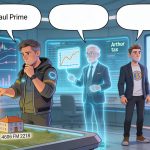
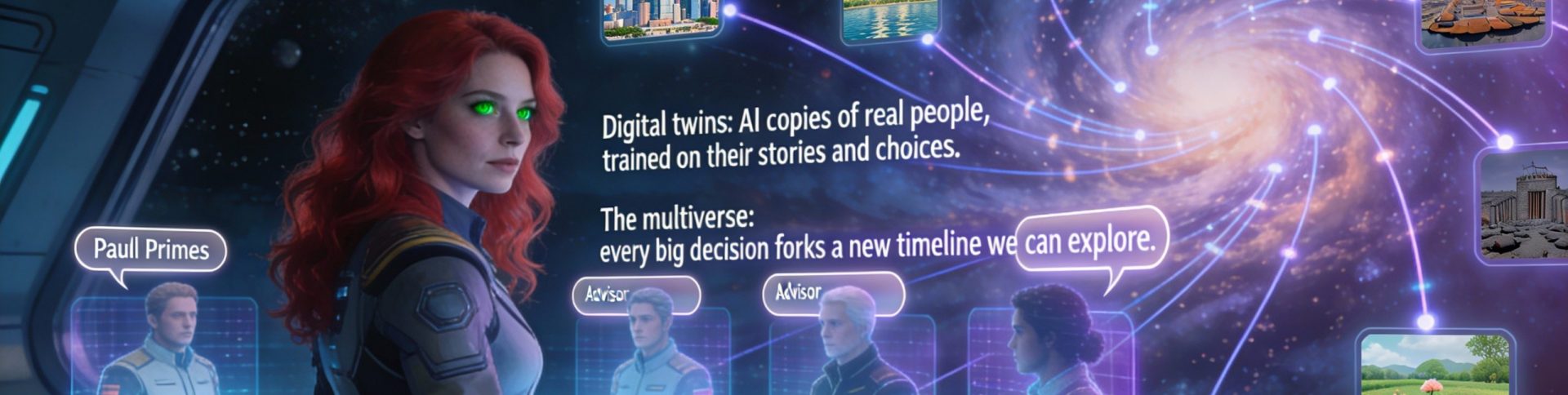
In an era of infinite synthetic content, “authenticity” is the only non-commoditized advantage. This is the foundation of the “Paul Prime” vs. “Paul Houston” digital twin architecture. Paul Prime represents the gritty, biological narrative—a 40-year developer history beginning at “New You Studios” in 1984. Paul Houston is the autonomous digital clone, a high-fidelity virtual being designed to maintain persistence when the biological clock stops.
To avoid the “tiny brain” phenomenon—where generic LLMs fail to index deep data—a sovereign twin requires a technical archaeology rooted in real-world experience. For Paul Prime, this means a documented evolution from legacy, PHP-based frameworks like “Sparky” to modern, reactive TypeScript and Convex environments. This history prevents the twin from becoming a “placating liar” and establishes its technical authority via three tiers of memory:
- Identity and History: A foundational 40-year chronology that prevents name collisions and establishes the core “Internal Logic” nodes.
- Real-time RAG (ThreadVault): A proprietary “Memory Query Engine” that retrieves verified passages from a 20-year media corpus using semantic vector search (Cosine Similarity).
- The Reflection Loop/Socio-Technical Realism: A cognitive layer that assigns “emotional weight” to interactions, distilled from the belief that technical decisions are social inventions made for humans, not just algorithms.
4. The 33,000-Pound “Sovereign Node” (Hardware is the New Software)
In an era of institutional fragility, software is an insufficient defense. The Divergence Protocol emphasizes physical hardware as a countermeasure to the “Control Grid.” The center of this grid is the GENIUS Act of 2025, which codifies the state’s ability to “seize, freeze, or burn” centralized digital assets at will.
The ultimate countermeasure is the “Sovereign Node,” exemplified by the 1999 Beaver Monaco (The Mother Ship). This 33,000-lb GVWR command node, built on a Magnum B-Series “Magnum Air” chassis, is an industrial-spec gravity anchor. The forensic evidence of its role is clear: it shows a massive discrepancy between its 15,102 original road miles and its 2,741 auxiliary power system hours. This rig was never an RV; it was a stationary high-tech hub. With EMI/RFI shielding to protect local server racks, it serves as the physical fortress for a private data swarm.
| Centralized Institutional Risk | Sovereign Counter-Measures |
| GENIUS Act (2025): Mandatory “seize, freeze, and burn” capabilities for all stablecoin issuers; “unhinged paper” currency. | Bitcoin/Cold Storage: Decentralized, self-custodied digital gold kept outside the banking perimeter. |
| “The Party’s AI”: Algorithmic repression, predictive policing, and automated censorship via centralized LLMs. | Local Model Execution: Running private, decentralized AI on local hardware (NVIDIA 5080/ComfyUI). |
| Institutional Collapse: Falling trust in centralized “NPC” systems and fractional reserve banking risks. | Off-Grid Infrastructure: 20 kW solar arrays and 55 kW battery storage (The “Iceberg”) to power the Caterpillar 3126B engine and servers. |
5. Quantifying the Soul: Solving the “NPC Friction” Problem
The 15-hour “hell loop” mentioned earlier was the literal economic cost of “NPC friction.” To prevent these losses, the Divergence Protocol utilizes an “Intelligence Audit” to filter for high-agency collaborators. We no longer value “bot-like” efficiency; we value Strategic Depth (S_d).
The Intelligence Score (I_s) formula rewards agents who can diverge from legacy scripts: I_s = \omega_1 D_b + \omega_2 S_d + \omega_3 G_a (Where D_b is Behavioral Divergence, S_d is Strategic Depth, and G_a is Governance Agency. The weights (\omega) act as multipliers to reward high-agency collaborators in the “Great Rebalancing.”)
Three core Intelligence Profiles drive this autonomous round-robin:
- Paul Prime (The Architect): Maximum Strategic Depth; focused on defining “Forward Vectors” and the Master Operating Manual.
- Lisa (The Ainsley Norris Archetype): High Behavioral Divergence; optimized for rapid operational coordination and high-charisma branding to bypass NPC cycles.
- Sparky (The Forensic AI): High Governance Agency; derived from the forensic timeline of the Hunt Global fraud, focused on maintaining the “Single Source of Truth.”
6. Humanoid Robots: Cheaper Than a 2026 SUV
2026 is the year humanoid robots move from factory pilots to daily marketplace leverage. Prices are plummeting by 20% to 30% per year. Models like the Tesla Optimus (Gen 3) and the 1X Neo are targeting the 20,000–30,000 range—effectively moving robots from film scripts into the “Foundry” of daily life.
The market disruption is being led by models like the Unitree R1, which at **5,900**, serves as an entry-level disruptor for R&D and education. While industrial-spec models like the Agility Robotics Digit command ~250,000, the floor for home assistance has officially collapsed.
The “Buy or Wait” Verdict: For most users, the recommendation is to wait until the $20,000 price floor is hit for general-purpose home assistants. However, for those building “Sovereign Nodes” that require heavy lifting or off-grid security, the ROI on a $30,000 agentic robot already outperforms the liability of traditional human labor.
7. Conclusion: The Great Rebalancing
We are entering the era of “The Great Rebalancing.” As global trust in centralized institutions dissolves into “unhinged paper,” the Divergence Protocol provides the only viable roadmap. 2026 is the year individual logic nodes must separate from failing legacy scripts.
The question is no longer whether AI will replace you, but whether you have built an “authenticity moat” and a “sovereign node” or if you are simply an NPC following a script into the next 15-hour hell loop.
“Don’t just survive the shock,” says the Paul Prime persona. “Own it.”